SPAIN: YOU START WITH SCATTERED PIECES, YOU FIND SOLUTIONS, AND YOU VALUE THE JOURNEY MORE THAN THE FINAL OUTCOME
“You start with scattered pieces, you find solutions, and you value the journey more than the final outcome”
Elena Vallejo Lopezs
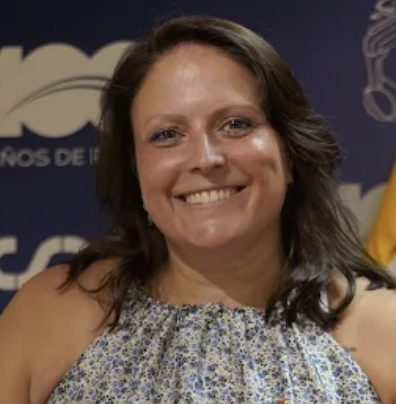
Jose Gorrotxategi
Thanks to:
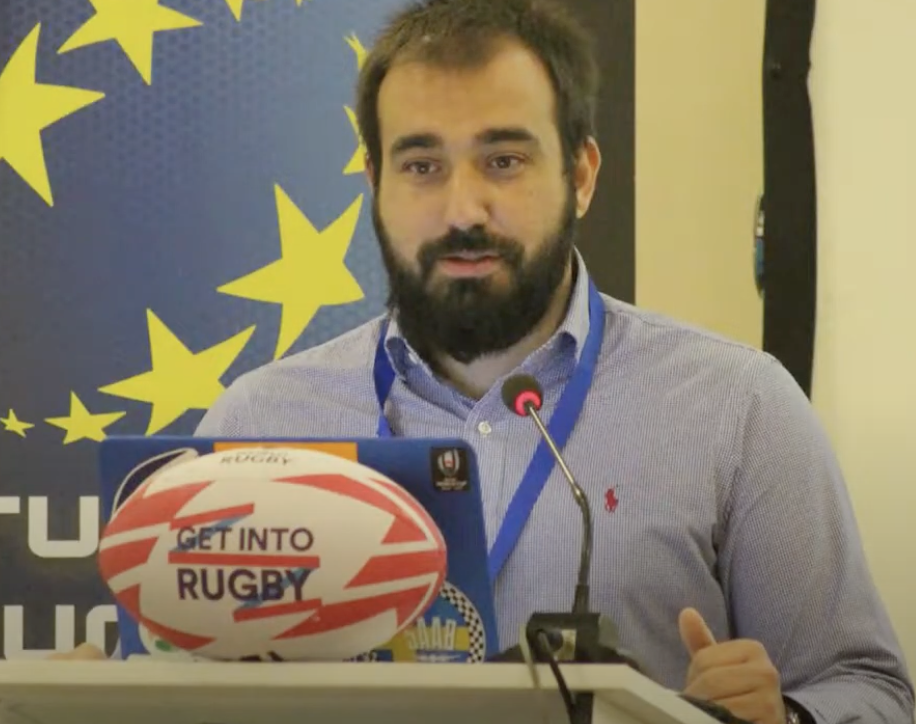
Elena Vallejo Lopezs
Vice President of the Spanish Federation
Jose Gorrotxategi
Former Head of Development, Women’s Rugby Europe Committee
- The history of the women’s movement in Spain
- Testimonials
- Reading time: 10 minutes
SPAIN - Find out more
Spain is a parliamentary monarchy in Southwestern Europe, with about 49.3 million inhabitants in 2025 and a slight female majority. Women hold 47% of the seats in the national parliament, thanks in part to laws promoting gender-balanced electoral lists. Female participation in the labor market stands at around 52–53%, with a gap compared to men (62%) that shows room for progress. Women dedicate about 19% of their time to unpaid domestic work, more than double that of men (8.6%). Despite their strong presence in the workforce, women remain underrepresented in senior leadership positions.
(SOURCE: INE; Wikipedia – Law of Equality Spain; Gender Data Portal – World Bank; data.unwomen.org; McKinsey – Women Matter Spain
HISTORY OF THE COUNTRY
1. When did the women’s rugby movement start in your country and what is its history? How is rugby structured in your country?
The women’s rugby movement in Spain began in the early 20th century, with the first documented reference to a match published in La Naci√≥n on May 14, 1935. However, the Spanish Civil War (1936-1939) and Franco’s dictatorship (1939-1975) suppressed women’s participation in sport, including rugby. After Franco’s death in 1975, women’s rugby began to flourish again. The first official women’s rugby team was formed in 1976 at Club Deportivo Arquitectura in Madrid, followed in 1979 by a second team in Barcelona, linked to the INEF (National Institute of Physical Education).
Women’s rugby became more structured during the 1980s, with the first women’s rugby league in Catalonia (1982-1983) and the first national championship (1989). Since then, the sport has grown significantly, with increasing numbers of players, teams, and competitions at national level.
Key milestones: 1935: First documented women’s rugby match (Madrid). 1971: First women’s rugby match reported in Asturias. 1976: First official women’s rugby team (CD Arquitectura, Madrid). 1979: Second team established (INEF, Barcelona). 1982: INEF Lleida forms a women’s rugby team. 1983-1984: First women’s rugby league in Catalonia; 145 registered players. 1989: First national championship; over 150 registered players. 1991: Creation of Spain’s women’s national rugby team. 1995: Spain competes in its first Women’s Rugby World Cup (6th place). 2010: Over 1,000 registered women players. 2013: Registered players reach 3,000. 2016: Spain’s women’s rugby sevens team qualifies for the Rio Olympics. 2022: Over 6,844 registered women players, including 1,200 girls under 12. 2025: Spain qualifies for the Women’s Rugby World Cup in England. From just 145 players in the 1980s to nearly 7,000 today, women’s rugby in Spain has grown tremendously. Today rugby is well structured, with national leagues, strong international presence, and increasing professionalization. With Spain set to compete in the 2025 Rugby World Cup, the future of women’s rugby looks brighter than ever.
National Team: Spain’s women’s rugby team, Las Leonas, has participated in six editions of the Women’s Rugby World Cup, with results including: 1991 (Wales): 6th place 1994 (Scotland): Did not participate 1998 (Netherlands): 7th place. 2002 (Spain, host): 8th place. 2006 (Canada): 9th place. 2010 (England): Did not qualify. 2014 (France): 9th place. 2017 (Ireland): 10th place
2021 (New Zealand): Did not qualify. 2025 (England): Qualified
Domestic structure (2024-2025): Division de Honor Femenina (Liga Iberdrola de Rugby): Top women’s rugby league, with 8 teams. Division de Honor B Femenina: Second tier, with clubs aspiring to promotion. Copa de la Reina: Knockout-style national cup competition.
Regional Leagues: Over 120 senior women’s teams. Grand Prix Sevens (GPS): Three-leg national Sevens competition, 12 teams. Challenge & Regional Sevens Leagues: More than 50 teams competing locally to qualify for national-level tournaments.
Spain has also dominated the Rugby Europe Women’s Championship, winning multiple titles between 1995 and 2024, including consecutive victories in recent years.
2. Do you think playing rugby has a social impact for a woman in your country?
Yes, rugby has a significant social impact for women in Spain. It is more than just a sport – it represents empowerment, equality, and breaking stereotypes in a country where rugby has traditionally been male-dominated.
Empowerment and confidence: Rugby helps women build self-confidence, resilience, and leadership skills. Its inclusivity, valuing different body types and abilities, encourages self-acceptance and body positivity.
Challenging gender stereotypes: Women excelling in rugby break traditional roles. The rise of Las Leonas has boosted visibility and respect for women’s rugby.
Community and inclusion: Rugby fosters a sense of belonging and solidarity, with clubs also engaging in community and youth development projects.
Education and career opportunities: Scholarships and pathways through rugby provide academic and professional benefits. Many women also become coaches, referees, or sports managers.
Health and wellbeing: Rugby promotes fitness and mental strength, improving stress management and reducing anxiety.
Despite challenges such as limited funding and professional opportunities, women’s rugby in Spain continues to expand, with professional leagues like Liga Iberdrola playing a crucial role.
3. In your opinion, what can rugby give to women in your country?
Rugby can offer Spanish women the chance to fully pursue their passion. Professionalization, though gradual, is becoming a reality. This inspires younger generations, strengthens women’s visibility, and highlights the importance of equality in sport. Rugby is not just competition – it reflects the fight for recognition, dignity, and equal opportunities. Saying “I play rugby” should bring pride, not surprise. Women’s rugby in Spain is both a present and a future.
JOURNEYS THROUGH RUGBY (Jose Gorrotxategi)
The interview responses are taken from the following video:
1. When did you start playing rugby and how did you discover it?
I had varied interests, including aviation, and was fortunate to fly with friends, though I never got my license. I started as an electrical engineer, though I spent too much time at the bar. Then I studied business administration for four years before realizing it wasn’t my passion. Finally, I studied to become a primary school teacher, which pleased my parents. It was at that time that I returned to sport, which led me to a career in rugby. These diverse experiences shaped my understanding of complex scenarios and helped me empathize with people in difficulty – something common in rugby.
2. What has rugby taught you that has impacted your daily life? Can you give me an example of when a rugby mindset was useful?
Rugby changes us, helping us face life’s challenges with resilience. (…) That complexity is what makes rugby beautiful and similar to life, where hard work, dedication, and adaptability are essential. Rugby is not an easy sport; it is complex and demanding. (…) These phrases show how rugby’s values have been internalized and shaped my life approach.
3. Can you give me three words that connect rugby with freedom
Equality (“freedom means equal opportunities for everyone”).
Adaptability (“dedication and adaptability are essential”).
Empathy (“it helped me empathize with people in difficulty”).
4. What does living in a land of freedom mean to you?
Freedom, for me, means the ability to enjoy, to love, to hate, and to follow a process that helps you understand why things happen, allowing you to make decisions that put you in a better position for the future.
5. What object represents you and why? What is an aphorism that guides your life?
One of my hobbies is building plastic models. This process reflects the rugby mindset: you start with scattered pieces, you find solutions, and you value the journey more than the final outcome.
A guiding aphorism: “Seek to understand before seeking to be understood.”